Candy Topped Cookies

DLD: Candy Topped Cookies

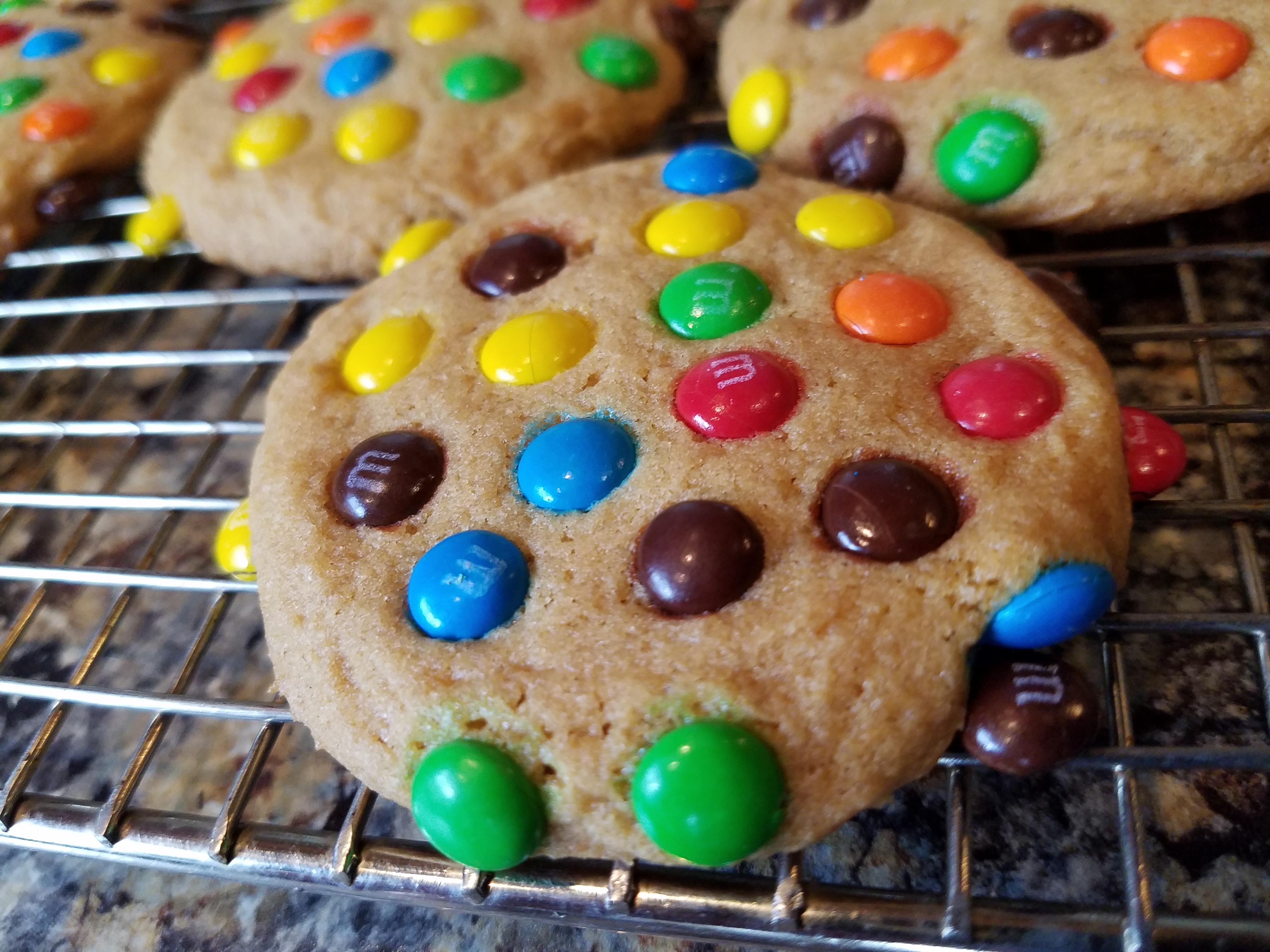
Here is another cookie recipe for you, and this one is a classic. These candy-topped cookies are soft, chewy, sweet but not cloying. Kids love helping with making them, and everyone loves eating them. The best part of this recipe is how versatile it is—you can add stuff to the dough, put stuff on top of the cookies, or any combination of the two. So without further ado, I present to you the candy-topped cookie recipe.

It all Comes Down to Pizza

DLD: Pizza Dough & Pizza

I first published a recipe for pizza dough on this blog four years ago. Back then my wife and I were living in Idaho Falls, my wife had just started her internship at EIRMC, and I was looking for a full-time job. My oldest son was less than a year old, and life was a whole lot simpler, but not necessarily better. A lot has changed since then, but one thing has remained constant—I love pizza!!!!

Coconut Flour Waffles - Take 2

DLD: Coconut Flour Waffles (Take 2)

DISCLAIMER: This recipe is intended to be a starch-free/sucrose-free recipe.
This syrup is NOT low calorie or sugar-free.
Please use caution when adding a new food to a special or restricted diet—
—What works for my family may not work for yours.

I have a slightly uncomfortable confession to make—I don't like coconut flour waffles. This being said, the reason is mainly that I don't need to like coconut flour waffles. I make them for my two oldest children who need to avoid starch. So when I first posted a recipe for coconut flour waffles, I was making waffles for kids who had never had anything better. I also wasn't too concerned with the flavor being amazing because they always drenched their waffles in sugar-free syrup anyway and wouldn't be able to discern the flavor of the waffle. However, in the years since I first posted that recipe it has gotten an amazing reception on Pinterest, and I have recently gotten some comments on it which made me doubt the excellence of the recipe. I don't want any of the recipes on this blog to be subpar, so I humbly submit to you a new, improved recipe for coconut flour waffles which hopefully will tickle your taste buds and please your palate.

Banana Bread

DLD: Banana Bread

When I was growing up, banana bread was one of those things that I could only ever remember my dad making. When the bananas would start looking so disgusting (to a young child) that they were ready to be thrown away, it was time for Dad to make banana bread. His recipe came from the Betty Crocker cookbook—you know, the one with the red cover—and it was the only recipe for banana bread that was ever made in our house.

The recipe yields 2 loaves, but in a family with 8 bread lovers, those loaves didn't stick around very long. It wasn't quite as bad as "if you blink you missed it," but it was close. Nowadays, with my family it lasts longer, but only because my little boys can't eat it. I still have to exercise restraint to not eat the entire loaf myself......in one sitting.....for real.

Zucchini Bread for CSID-ers

DLD: Coconut Flour Zucchini "Bread"

DISCLAIMER: This recipe is intended to be a starch-free/sucrose-free recipe.
This syrup is NOT low calorie or sugar-free.
Please use caution when adding a new food to a special or restricted diet—
—What works for my family may not work for yours.

There's not really much to say about this recipe. I wanted to make a version of zucchini bread that my CSIDers could have because there was a lot of zucchini and I really like zucchini bread. I started with my recipe for "normal" zucchini bread and proceeded to modify it as I saw fit in order to come up with this recipe.

Once comment on the nature of quick breads like zucchini bread and banana bread and the like—these are not really what I would consider bread. I have often fallen prey to the though process that banana bread is bread and that makes it good for breakfast, but it's time to start being honest with ourselves. Zucchini bread is really just cake. There is a much lower ratio of sugar & fat to flour than regular birthday cake, but quick breads often fall closer to cake than bread in the baked goods family tree.

This is not to say that I think you shouldn't eat banana bread or zucchini bread or those deliciously huge muffins you bought from the club store for breakfast. I am just saying that we need to be a little more honest in realizing that they really aren't that good for you. But hey, at least with zucchini bread you are getting some vegetables, right?


Anyway, I hope you enjoy the recipe. My oldest would probably eat it all day long, and his little brother really really wants to like it, and always asks for it, but never seems to be able to get that into it. Oh well. Have fun baking!


—Sam


CSID-Friendly Blueberry Syrup

DLD: Blueberry Syrup

DISCLAIMER: This recipe is intended to be a sucrose-free recipe.
This syrup is NOT low calorie or sugar-free.
Please use caution when adding a new food to a special or restricted diet.
What works for my family may not work for yours.


There isn't really much backstory to this recipe. Yesterday the boys woke up and wanted waffles for breakfast and I didn't have any other plans so I said okay. I must have been dreaming about IHOP or something, because I suddenly was taken with the idea of making a blueberry syrup to go along with their waffles. So I plugged in my waffle iron and got to work.

Heavenly Dinner Rolls

DLD: Heavenly Dinner Rolls
Dinner in the Life of a Dad—Rich Dinner Rolls

I have a thing for breads. My wife says I have a gift for them, in fact. It is true that I love to bake bread, and have been doing so for a long time.

At first, I followed recipes found in books and online. These worked pretty well, and I learned a lot about baking from the experience. Then, when I was serving a LDS mission in Switzerland, I found Betty Bossi's Brot und Brotgerichte, and discovered that one can use a standard bread recipe and technique to make lots of different types of bread. I also learned the basics of the science of bread baking—namely that you can substitute ingredients as long as you somehow make up the difference.

Then, while working for Lofthouse, I was able to take a series of online classes from the American Institute of Baking, called "The Science of Baking." As part of this course I learned about bakers' percentage, which changed how I view baking forever. In short, bakers' percentage, unlike formula percentage, sets all ingredients as a percent of the total weight of flour. Why is this so life-changing? Well, it means that you can easily change the amount of one ingredient without having to recalculate every other ingredient. I always use this technique when I am writing a recipe.

This recipe started as a desire to make a really, really rich and delicious dinner roll to accompany some baked potato soup. I wanted something that was airy yet filling, sweet and rich yet chewy, and full of delicious flavor. The secret to achieving all of this is in the technique, the ingredients, and some patience. And without further ado, let's dive into the recipe for the best dinner rolls you will ever have.

Orange Gingerbread Cookies

DLD: Orange Gingerbread Cookies

Christmas time is a wonderful time. A wonderful time of the year.
Filled with smiles and laughter and fun all around.
With cakes, pies, and cookies your joy will abound.
Gingerbread cottages sparkle with snow,
Yet their fate is to wait til in the garbage they go.
Why not instead, with joy and with glee,
Make a gingerbread cookie? It's easy you'll see.
All you need is some time—and an orange or two—
And then for Christmas treat fixes, your friends will come to you.


I really do love gingerbread. I apparently like it so much that I wrote a (really bad) poem about it. What I don't like are hard "gingerbread" crackers over-flavored with cloves and allspice whose sole reason for existance is to be turned into amateur building material.

Chewy CSID-Friendly Cookies

DLD: CSID-Friendly Cookies

DISCLAIMER: This recipe is intended to bea reduced-starch/starch-free/sucrose-free recipe.
These cookies are NOT low-calorie, sugar-free, or gluten-free.
Please use caution when adding a new food to a special or restricted diet.


Hello again recipe seekers. I am very glad that you have decided to join me today as I have a great recipe to share with you—CSID-Friendly COCONUT FLOUR COOKIES. Before you scoff and hit the back button on your browser in disgust at yet another failed cookie recipe, give me a minute to explain.

Way back in January of 2013 my oldest son was diagnosed with CSID, which is a genetic disorder which prevents his body from producing the enzymes needed to break down sucrose (table sugar) and maltose (a major component of all starch). Think of it like lactose-intolerance for sugar and starch. A few months later my second son received the same diagnosis. Over the past almost three years we have managed to recreate many "normal" foods in a CSID-friendly fashion, but I hadn't yet really been able to make a really good cookie recipe for them. This was somewhat of a sour point with me as I worked for two years developing cookie recipes for Lofthouse Cookies.


True, there are many recipes for cookies which do not use wheat flour as their base, and there are even some for cookies which don't use any grains. Meringues come to mind, as do one of my favorite Christmas cookies—Zimtsterne. While both of these cookies are delicious, they are a pain in the rear to make, and they don't really work for the good old American staple, chocolate chip cookies. My wife has searched on and off for a good CSID-friendly cookie recipe, and has found some based on coconut flour, but the cookies they yielded didn't really work for me. They were often dry and crumbly, and I wanted something soft, moist, and chewy.

Then one Saturday I was suddenly hit with inspiration, and I knew how to solve my problem. Chocolate chip cookies are sweet (a no brainer, just add a sweetner), but also chewy, which is brought about by a combination of hygroscopic properties of brown sugar and the protein network created by the gluten found in flour. My revelation was that I could replicate both of these by using agave syrup and vital wheat gluten. The bulking of wheat flour was replaced by almond flour, and the moisture absorption was accomplished with coconut flour. Further structure comes from two eggs instead of the usual one. My go-to replacement for sugar, dextrose, isn't sweet enough to use by itself, so I split the amount 50/50 with fructose. And just like that, a cookie was born.

What was a little suprising for me was that these cookies were actually really good. If you didn't tell me before hand that they were developed to be a CSID-friendly cookie, I probably wouldn't have known. They are delicately coconutty, delightfully chewy, and deliciously moist. These would be a good base for frosting, ice cream sandwiches, or eating with milk. Enjoy!

Peanut Buttery Chocolate Buns

DLD: Peanut Buttery Chocolate Rolls
Dinner in the Life of a Dad—Peanut Buttery Chocolate Buns. Gooey and delicious, chocolatey and peanut buttery. Great alternative to cinnamon rolls!

I really don't know what to say about this recipe because I can only say delicious so many times. These buns are truly, completely, and amazingly delicious.

The idea from this recipe came from wanting to create, of all things, peanut butter and jelly bread. I found lots of recipes online for peanut butter quick breads, and for buns made from rolling out regular dough and spreading it with peanut butter and jelly before rolling it up again. They looked good, but seemed really messy, and I have never considered quick breads to be a true bread, but rather a kind of cake. I wanted sliceable sandwich bread with peanut butter in the dough. Once again, I had to make up my own recipe. Oh darn. (^_^)

I made a loaf, and found it to be tasty, and I immediately starting thinking of the possibilities. Then I saw an episode of Cook's Country where they made cinnamon buns, and the idea for this recipe just came together.

Basically, this is a basic sweet roll dough with peanut butter replacing the fat in the dough. I had to take out some of the flour as well to make up for the solids in the peanut butter, but more on that later. The filling is your typical cinnamon roll filling except you replace the cinnamon with cocoa powder. Instead of cream cheese filling I decided to go with a chocolate donut glaze to complete the recipe.

The flavor is intensely peanut buttery, with chocolate permeating the entire bun. If you are fan of peanut butter filled chocolate cups, you will absolutely love this recipe. Just make sure you invite some friends over or you will end up eating the entire batch by yourself.

The BEST Low-Carb Bread EVER!!!

DLD: The BEST Low-Carb Bread EVER!!!
Dinner in the Life of a Dad—The BEST Low-Carb Bread Ever!!! The last recipe for low-carb bread you will need.

Updated 3/9/2016 to include pictures of pizza made with this dough as the crust.

I have finally posted the tutorial for this recipe. To be honest, this is the longest I have ever worked on a recipe, and I only got it where I think I want it about a month ago. As you can guess by the title of this post, the following recipe is for low-carb bread.
My quest for a good recipe for low-carb bread started two and a half years ago when my two oldest sons were diagnosed with CSID (congenital sucrase-isomaltase deficiency). This disease creates, in very short terms, starch and sugar intolerance. After I got over the initial period of shock and decided to start making recipes—some of which are on this blog—I realized that a really good bread would be hard to find.
The main reason for this is that bread is mostly made up of wheat flour, which is about 75% starch, which is a big no-no for my kids. Low-carb breads, for the most part, rely on almond flour or coconut flour, and wind up more like quick breads or cakes than fluffy white bread. My goal was to find/write a recipe for bread which fit the following criteria:
  1. Would be low in digestible carbohydrates.
  2. Would have a bite & chew similar to that of "regular" bread.
  3. Would be made of easy-to-purchase ingredients.
  4. Would be leavened by yeast fermentation.
  5. Looked, smelled, and tasted good.
  6. Could be used in all applications like wheat bread.
I scoured the internet for recipes, and even tried a few out, but I wasn't ever really happy with what I found. There were some common elements to all of the recipes, so I decided to use those to create my own recipe.

Coconut flour waffles revisited..and now pancakes!

Wow! When I posted my recipe for coconut flour waffles on this blog almost exactly two years ago, I had no idea what type of reception it would get. To date, that recipe has been viewed over 20,000 times, and has been (re)pinned on Pinterest more than 6000 times.

I have had a few comments on it though which made me look at the recipe again. It is also time for a confession regarding that recipe—I don't really like it. Don't get me wrong though. For a 100% gluten free, very low-carb waffle recipe, it isn't bad. Obviously people have been looking at it, and I would wager that some have even tried it successfully. But I don't use that recipe any more.

The journey for a really, really good recipe for a waffle/pancake began because of CSID, a genetic enzyme deficiency which equates to sugar/starch intolerance. My two older sons have this deficiency, but for some reason, they still want to have breakfast in the morning.


Anyway, I wasn't happy with the texture of the waffles produced by my original recipe. They fell apart a little too easily and didn't reheat well in a toaster. So, I figured I could use my food science savvy to engineer a slightly better option. The result you see before you.


And yes, I do realize that the pictures in this post are for pancakes. There's a very good reason.
...
...
...
Alright, fine. I just wasn't making waffles the day I took these pictures. But I promise it started out as a waffle recipe. The information below still applies in any case.

An important note for those with CSID or who are making food for those with CSID—this recipe does contain starch. If you(or your CSID patient) cannot tolerate starch please exercise caution before consuming food made from this recipe.

Not gone yet. Short update.

Since I am really very bad about apologizing for not having written for an exceedingly long time, I'm not going to even try.

Instead, I am going to write a very short post to pretty much say that (get off my computer, cat) I am going to make a concerted effort to regularly post on this blog. It has really been a crazy couple of years (can't believe it's been that long since I have posted), and I'm hoping that life will settle down again soon.

In the future the recipes I post will be divided into two main categories: CSID-friendly recipes which my two boys enjoy, and non-CSID-friendly recipes which my wife and I enjoy. For the recipes which fall into the second category, I will try to make a note of how the recipe could be modified to be CSID-friendly, or at which point the recipe stops being CSID-friendly.

We have been living with my sister-in-law and her family while we have been looking for a house, and she has been a saint in terms of accommodating my family in her meal preparation. To avoid having to cook two dinners every night, she tries to cook meals which are easily adapted to a CSID-friendly diet. My kids have become much better eaters while we have lived here, which has been a huge blessing since we were running out of ideas of what to feed them. (^_^)

Anyway, I feel like I'm starting to ramble, so I am going to call this post done. Thanks for listening and humoring me.

Next post will be a recipe for the ultimate low-carb sandwich bread.

See you then.

Anyone have syrup?

DLD: Anyone Want Syrup
Dinner in the Life of a Dad—Coconut Flour Waffles. My kids can't get enough of these!

Um, hi everybody. So, um, sorry that I haven't written anything in a long time. Would you believe me if I said I was busy? No? Oh well. Even if you don't believe me, I promise that I have been really busy—work has been crazy and there's been a lot going on at home, and I just haven't been able to dedicate the time to writing.

But never fear, for I have another post for you all, and it's one that has been often requested by people whose lives have been affected by CSID. Today's recipe, if you weren't able to deduce it from the title of the post, is for waffles. Yes, I will share with you my recipe for low-carb, CSID-friendly waffles. My son Jayson loves these, and Samantha has even said that they aren't at all bad. Okay, fine, they're pretty good considering that they contain no grains whatsoever.

What is great about this recipe is that it is easily scaled up or down depending on how many waffles you want to make.

Pizza-style scrambled eggs

I realize I lost some of you already once you saw the title of this post, but bear with me and I will share with you a deliciously different way to prepare your morning eggs.

Moreover, depending on which brand of pizza sauce you use (I like Great Value), this recipe is CSID friendly. Jayson has eggs almost every day for breakfast, and this is his favorite way to have eggs. I have never seen him turn pizza eggs down, especially if I cut it into wedges for him like a real pizza.

Anyway, this is surprisingly tasty. I would even eat it, and not only if I had to, even though I don't really like scrambled eggs. "You do not like them/so you say./Try them! Try them!/And you may./Try them and you may I say," (Green Eggs and Ham, Dr Seuss).

Oh, by the way, this recipe can easily be scaled up or down as you like, although I wouldn't really recommend scaling too far down.

Chocolate lovers cupcakes and frosting

DLD: Chocolate Lovers Cupcakes & Frosting

Here is another CSID-friendly recipe for all of you, and this is probably one of my favorites. Dark Chocolate Coconut Flour Cupcakes!! My quest for a CSID-friendly cupcake began with my sister-in-law's family, actually, because they have a lot of birthdays all clustered in one part of the year. Because we live so close to their family, we were always invited to the family birthday parties, but I must admit I had some underlying hesitancy because I knew that Jayson wouldn't be able to eat the birthday cake, and I didn't want him to feel left out.

So I started searching for chocolate cupcake recipes that would be CSID friendly, and I was rather lucky in my search because I could tap into the really big paleo-diet movement, which eschews grains and refined sugars for the most part. I decided to go with a chocolate cupcake because I knew that the cocoa would keep the coconut flour content lower, and would just be really delicious.

Anyhow, I found a recipe and tried it out, and the results were decent, but to be honest, I wasn't a big fan. Jayson ate it, especially since I made a sugar-free ganache to go on top, but I wouldn't eat it. They weren't very sweet and the cocoa made them kind of bitter. I wanted something better, something that with a texture more similar to that of real cupcakes.

I found another recipe which looked promising, but the mixing protocol was more similar to muffins than cupcakes. "Wait a second," I told myself, "Why not take these ingredients and adapt them to a cupcake recipe methodology you know works." Brilliant! The result was a light, fluffy cupcake with a deep chocolate flavor, and just enough sweetness to be a cake without getting overpowering with a frosting.

Nut, Sesame, and Cheese Crackers

One of the most difficult things about having kids with CSID is snack-time. Seriously—ever since Jayson learned what crackers were, all he wanted to eat were crackers. So when we found out he couldn't have them we were kinda devastated. What the heck were we supposed to give this kid for a snack? He loves raisins, but they have a lot of fiber in them and kinda made him go more than we liked. He likes cheese sticks, but only sometimes, when he asks for them. Grapes are too sour for his taste right now, and most other snacky foods have either too much sugar or too much starch.

I had spent a lot of time thinking about how to make him something he would like, when I stumbled upon a recipe for low-carb crackers and decided to give them a whirl. I was expecting something really tough and flavorless, but these taste amazing.

Once Jayson got over his fear of the loud evil food processor and realized what I was doing, we were subjected to cries of, "Cacker! Racker! Carcker!" and other such variations that only an almost two-year-old can come up with.
This continued until they came out of the oven when his persistent requests transmogrified into full-blown demands for crackers. In short, these are really delicious, and are a great snack for people with CSID, but also for anyone else who is trying to live a low carb diet.

Currying For Flavor

This has become one of the favorite dinners in my family, and what makes it even better is that it's something that my whole family can eat and enjoy. That's right kids, this one is completely CSID friendly! And what makes it even better, is that there are only 4 ingredients—count 'em, FOUR—so it's also super easy to make.

I can remember eating this as a kid, and loving it even then. All five of my siblings loved it too, and that was no easy feat let me tell you. There were only a handful of meals that my entire family liked, and this happened to be one of them. Then one night I was talking to my mom, asking her for dinner ideas that might be suitable for Jayson, and she mentioned honey-mustard chicken. I can't believe I hadn't thought of that, so of course I asked her for the recipe, which she gladly sent to me. I couldn't wait to see the ingredients that had made my childhood chicken so delicious.

Imagine my surprise when I pulled up the recipe and read the secret ingredient, the tantalizing flavor that perfectly married the tender sweetness of honey and the sharp bite of mustard—curry powder.

Really, curry powder? As a kid, I knew that I didn't like curry, so that came as a shocking revelation. On the other hand, curry powder was a simple enough ingredient. And because there are only 4 ingredients, I knew that this was certainly a CSID friendly recipe. The fact that it is delicious is just another great bonus.

Root Beer Cookies

I love ice cream sandwiches. They are just so deliciously tasty and fun to eat, not to mention being a great tie back to when I was younger and only had them on very rare occasions. I remember making ice cream sandwich cookies at work one day and I had the idea that a root beer float ice cream sandwich would be delicious, if I could only find a recipe for root beer cookies.

So, I looked around the internet and found a couple recipes, but none of them had everything I wanted. One thing they all had in common was root beer concentrate, so that was a definite must, but the rest of the recipe seemed to be up for debate. So I figured, I make cookies for a living, what's one more cookie?

The butter was an obvious choice, and I thought brown sugar would complement the earthiness of the root beer concentrate. To round out the flavor I added vanilla extract. Also on my list of ingredients was cream of tartar to get some of the acidity of root beer. I made a batch and found they still lacked the bite of root beer, so I upped the acidity with a little bit of citric acid. Finally I got some cookies that I felt were worthy of being given the name of root beer.

These cookies are perfect for making ice cream sandwiches. They have a deep root beer flavor that is not overpowering, and pairs perfectly with vanilla ice cream. For tips on making ice cream sandwiches read this post.

3 Secrets of Perfect Ice Cream Sandwiches

I love cookies and ice cream. The combination of sweet, sugary cookie and the rich, mellow ice cream is one that is hard to beat. Maybe I am weird, but I think the ideal sandwich is similar to a FatBoy—soft and tender cookie and firm ice cream. I could eat these ice cream sandwiches by the dozen. Actually, I need to make sure I don't eat one because I have that hard of a time stopping.

But all too often when I am offered a homemade ice cream sandwich I end up being disappointed because the cookies are so hard I can't bite through them without inevitably squeezing all the ice cream out from between the cookies and onto my shirt or—even worse—the floor. My own experiments were not any more successful though, and I had to settle for eating my cookies and ice cream in the form of crushed cookies mixed into ice cream. Not that this is bad, but crushed cookies do not a sandwich make.

There has to be a solution, I would say to myself. After all, ice cream and cookie combinations are found everywhere in the frozen dessert section of the grocery store, in the form of cookies & creme ice cream and, of course, ice cream sandwiches. But it wasn't until I got a project at work to make cookies intended for ice cream sandwiches that I learned the secret to perfect ice cream sandwiches.

And before you run away screaming and waving your arms shouting about chemicals and artificiality, let me tell you the secret isn't as complex or scary as you think, and it's something you can do in your own kitchen and freezer. And now let me share with you the secrets I learned as a professional baker about how to make perfect ice cream sandwiches.